VG recently tested 146 Norwegian tampons – and found lead in all of them.
Yes, you read that right. Lead in tampons. In something we insert into our vaginas every month.
And that's precisely where it becomes serious.
What we thought was safe, isn't necessarily so
Most of us don't think twice about what tampons and pads actually contain.
They have "always" been there and sold everywhere.
But the truth? No one checks what they are actually made of.
According to researchers, there is no safe limit for lead. Even small amounts can damage the brain, hormone balance, and fertility.
And when we know that the vagina is one of the body's most absorbent organs – actually a site being researched for medical absorption – it goes without saying that lead in tampons does not belong there.
Nevertheless:
📌 No requirements for what tampons may contain
📌 No ingredient labeling
📌 No control in Norway or the EU
We've been talking about this for 7 years – mostly to deaf ears
When we started Flove in 2017, we discovered precisely this: that there are no requirements for what menstrual products can contain – even though they are used directly inside the vagina.
We have tried to raise the issue since, but it has been difficult to be heard.
We have never wanted to engage in scaremongering.
But when there is lead in tampons, it concerns women's health, safety, and our bodies.
This is not about scaring.
It's about informing – because you deserve to know what you are actually using.
More than just lead in tampons
VG's findings are just the tip of the iceberg. Several studies have previously shown that many common menstrual products can contain substances that don't belong in the body:
📌 Women’s Voices for the Earth found traces of dioxins, pesticides, lead, and VOCs (volatile organic compounds) in well-known brands.
📌 European Environmental Bureau reported that plastics, adhesives, and bleaches in pads can release chemicals that are more easily absorbed through the vaginal mucous membrane.
📌 There are still no ingredient labeling requirements in the EU or Norway.
This is about women's health.
But what about period underwear?
In recent years, period underwear has really taken off (and with good reason).
But many that are marketed as antibacterial or odor-free, and that sounds good – until you see what it actually means.
You often find nanosilver, zinc, or chemical additives in the crotch.
And here's the problem:
❌ Such substances can disrupt the body's natural bacterial flora.
❌ They can leak into the body through mucous membranes.
❌ And the EU's chemicals agency is now considering stricter regulation of these very substances.
In short – products that are supposed to feel "clean" can actually mess with our flora.
So what do you do? 🌿
Start by choosing products you know the contents of.
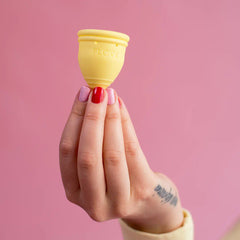
Look for documented materials, avoid "anti-odor" additives, and support manufacturers who are open about their process. As a consumer, you help determine which products stay on the market. When it comes to menstrual cups, look for transparency around production – and that the brand name is actually on the cup. If the cup is completely anonymous, without a logo or traceability, it is usually mass-produced and sold under many different names.
🩸 Flove menstrual cup – safety without shortcuts
When we developed the Flove menstrual cup, we decided early on to take the scenic route – not the shortcut.
The cup is made from 100% certified medical silicone, produced in a medically clean room and tested for safe use in the body for up to 30 days.
A product you can actually trust – without lead, dioxins, or hidden additives.
🌸 Flove period underwear – safe, soft, and no nonsense
Flove period underwear is designed to feel like regular underwear – just smarter.
They are sewn in silky soft TENCEL™ with a safe, breathable membrane from Sympatex.
No nanosilver. No antibacterial substances. No perfume.
Just documented materials that allow the body to breathe and balance itself – as it is meant to do.
This shouldn't be news
Over 1.5 million people in Norway have periods every month.
Yet, there are barely any regulations for what our products can contain.
The fact that VG is now highlighting this is not just important – it is necessary.
Because women's health has been off track for far too long, and it's time to demand better.